
Beyond Note-Taking
Read the publication, method and evidence behind a privacy-preserving, diarization-aware AI assistant for oral examinations.
Abstract
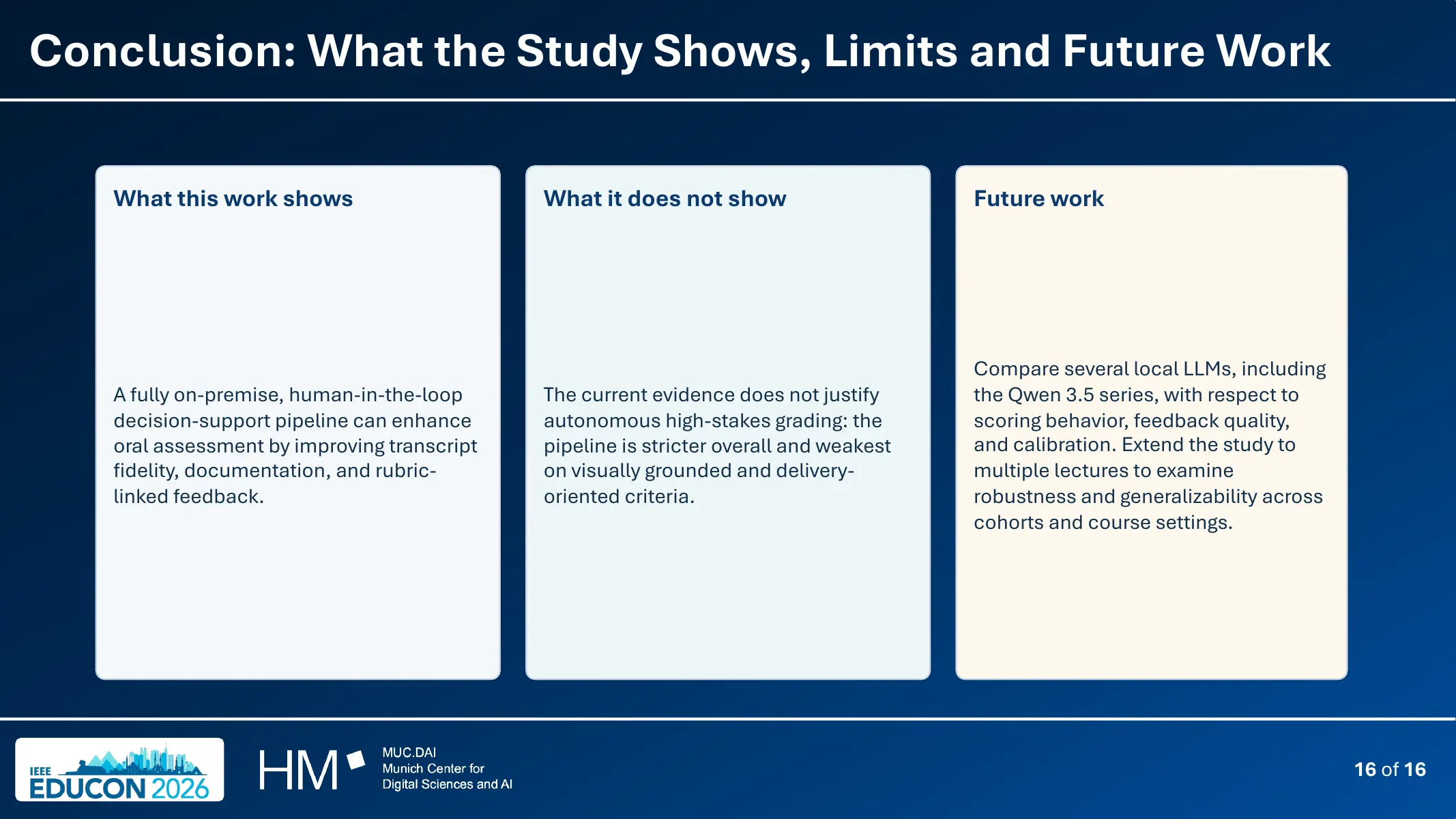
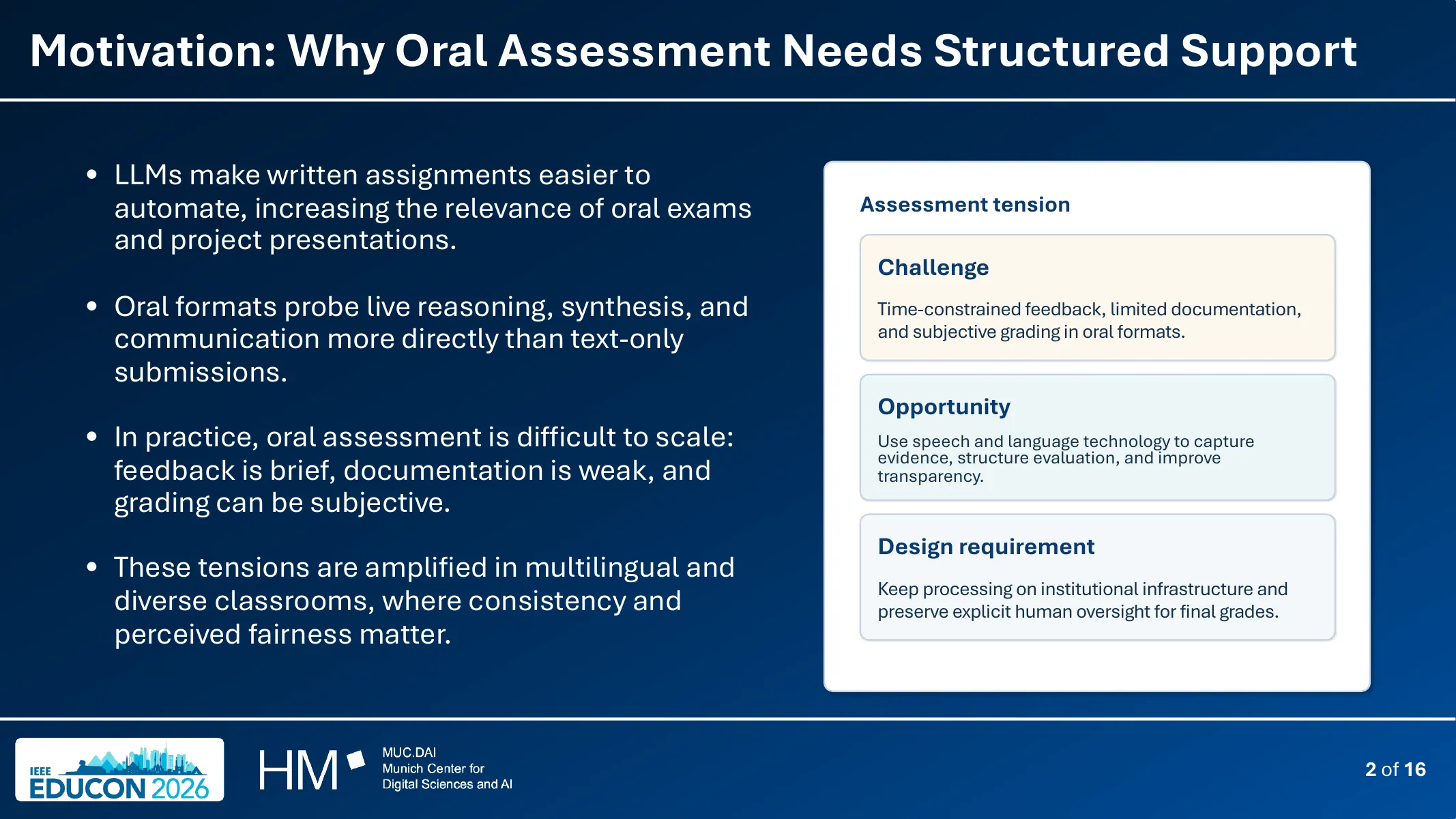
Oral examinations produce complex, time-bound evidence. This work investigates how speaker-aware transcription, locally hosted retrieval and transparent AI-generated observations can support examiners without delegating assessment or final judgment to a model.
Research question
How can an AI assistant help examiners recover and connect evidence from an oral examination while preserving privacy, speaker attribution and human responsibility?
Method
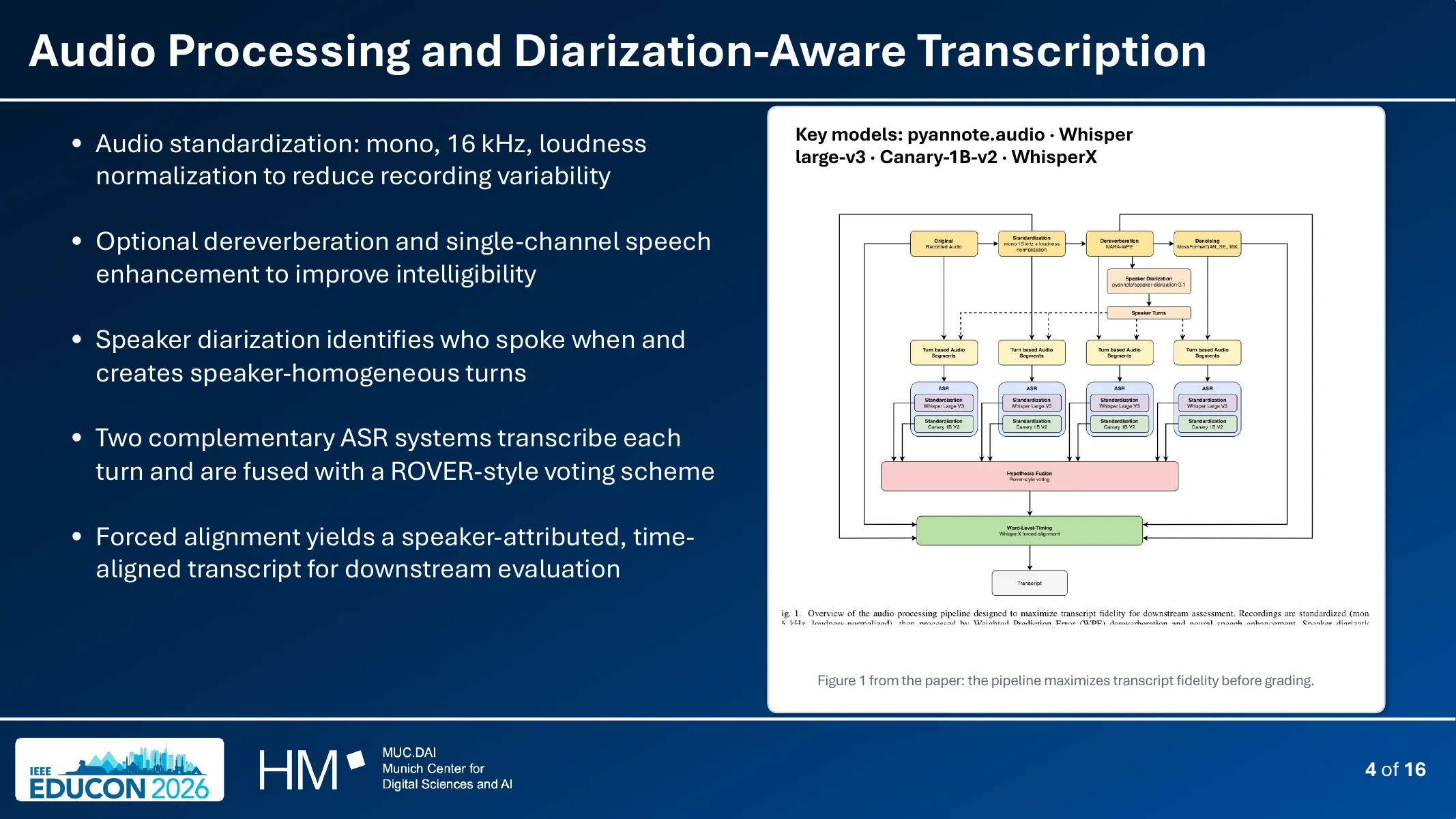
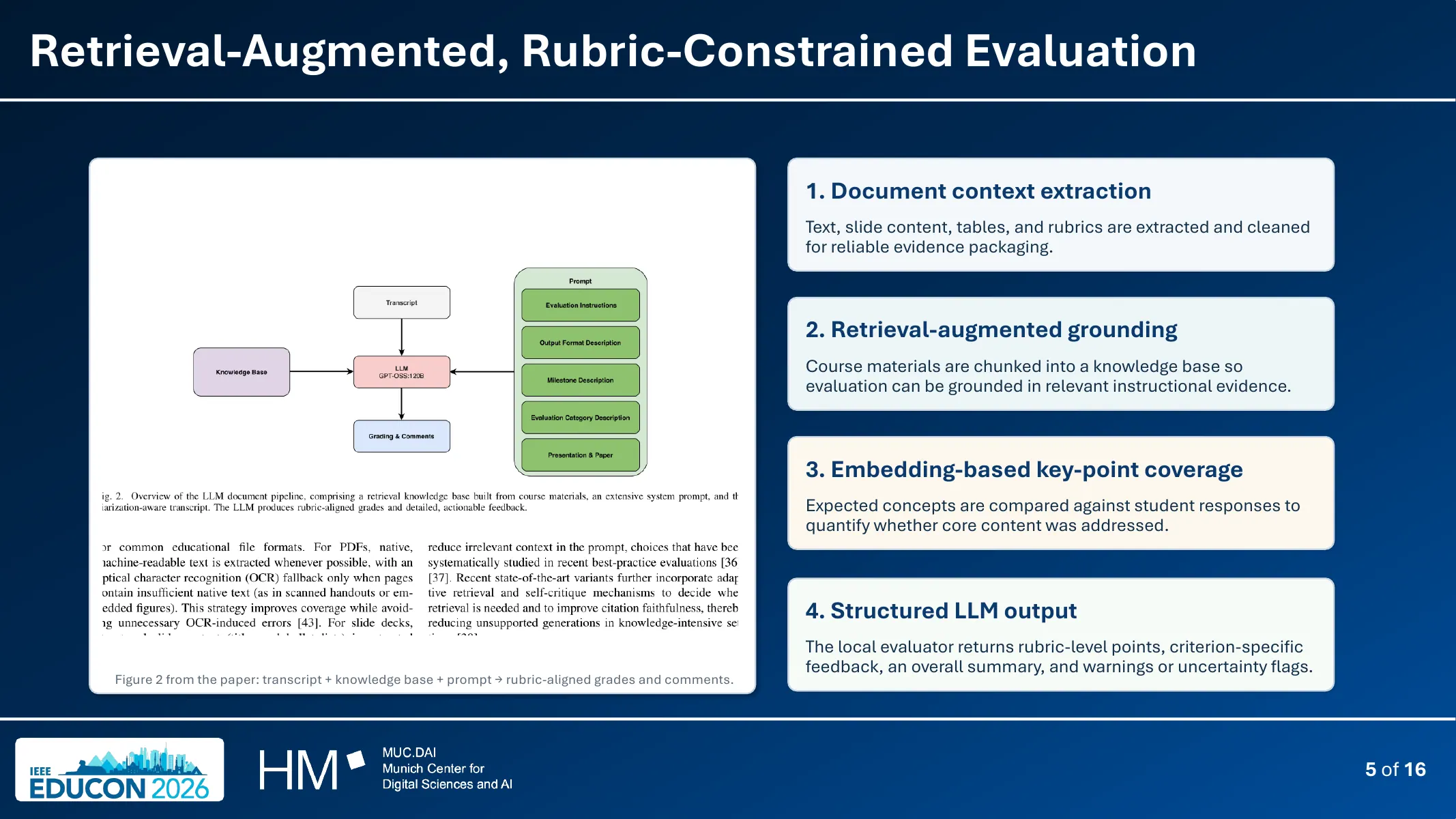
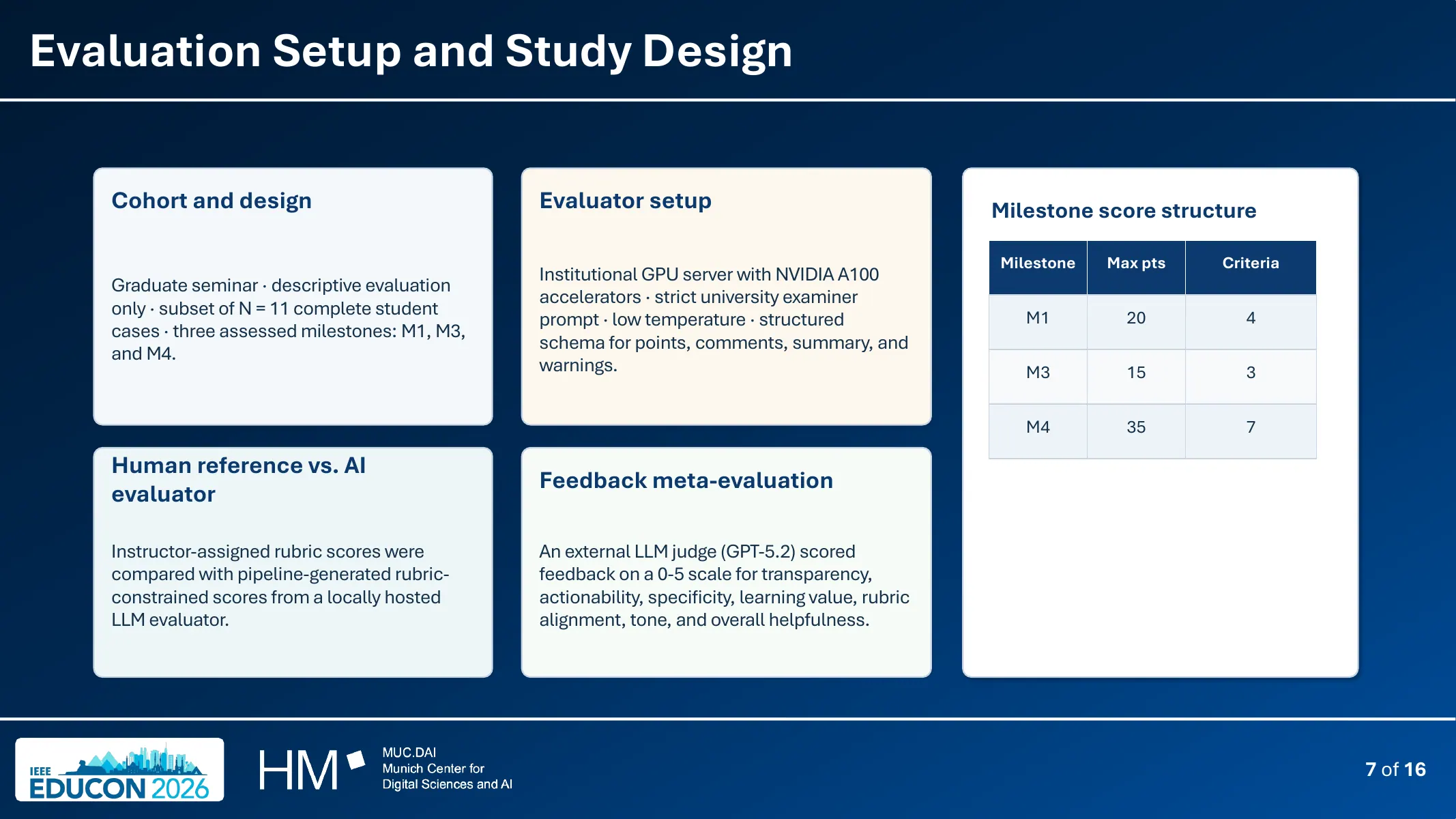
The system combines enhanced audio, diarization, transcript alignment, retrieval from approved course material and bounded observation generation. A readable report links every observation back to speaker-attributed evidence and assessment context.
Findings
- Speaker attribution makes generated observations easier to inspect.
- Local infrastructure keeps sensitive institutional data inside the university environment.
- The useful role is evidence support; assessment remains a human act.
Limitations
- Transcription and diarization errors can distort evidence.
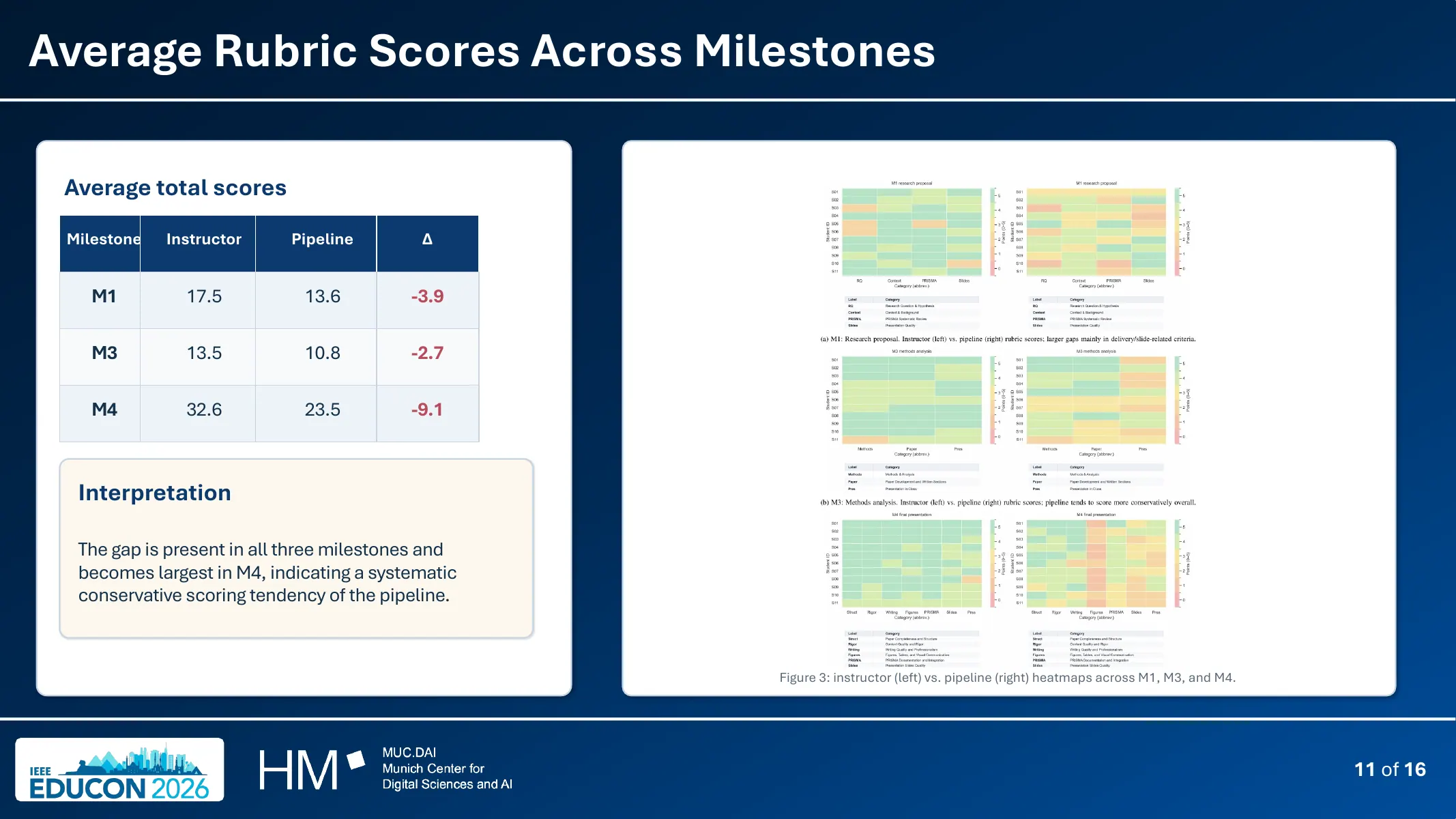
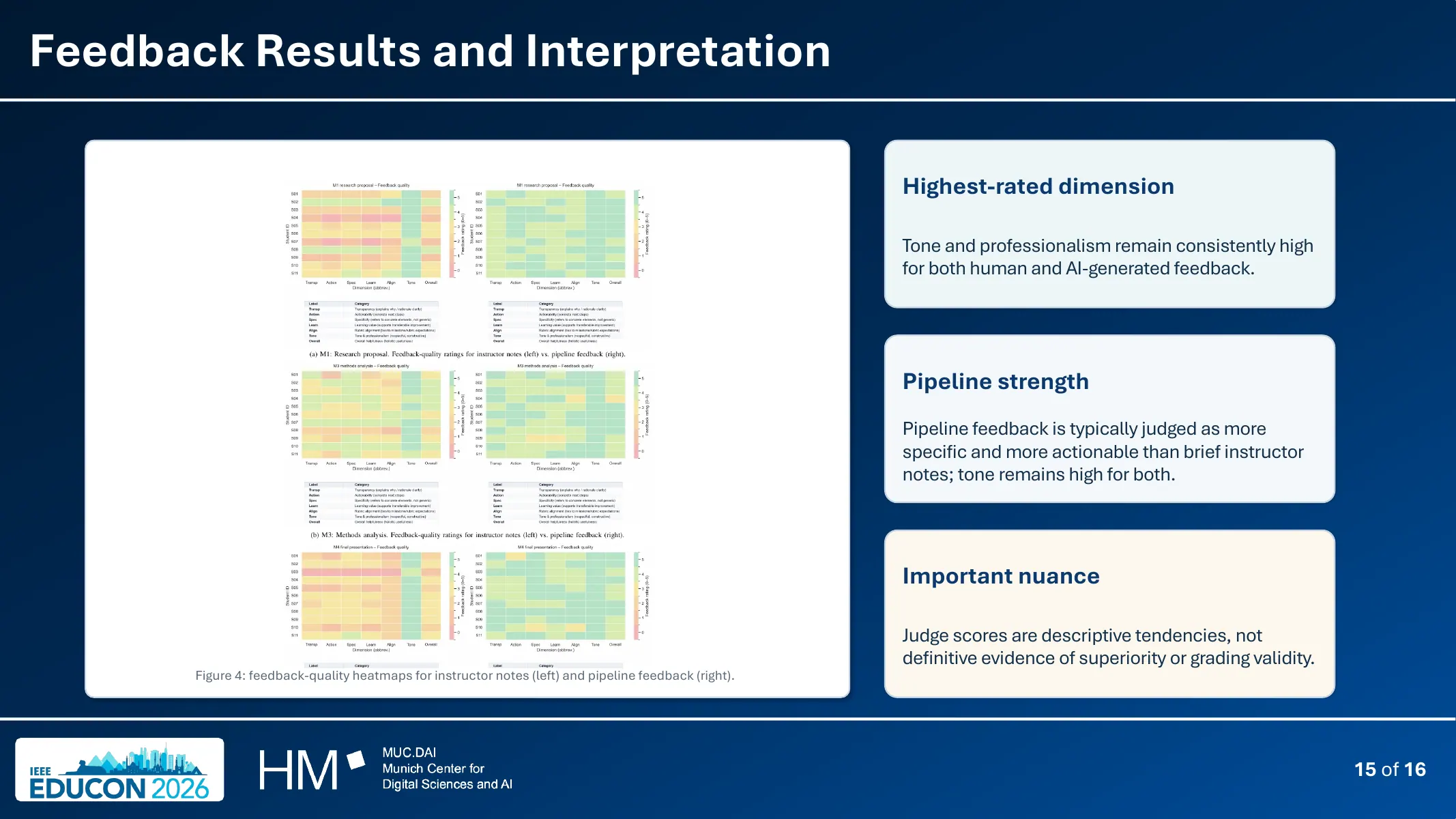
- Generated observations require review and cannot establish a grade independently.
- The reported setup belongs to a bounded institutional context and is not a general-purpose surveillance system.
Citation
Dauner, M., Liu, R., Socher, G. (2026). Beyond note-taking: Empowering examiners with a diarization-aware and transparent AI assistant for oral exams. IEEE EDUCON 2026, 1–10. https://doi.org/10.1109/EDUCON67543.2026.11574092
Open publicationBeyond Note-Taking presentation
Slide 1 of 8


- Slide 1 of 8
- Slide 2 of 8
- Slide 3 of 8
- Slide 4 of 8
- Slide 5 of 8
- Slide 6 of 8
- Slide 7 of 8
- Slide 8 of 8