

The Craft of the Future
Where Ideas Become Systems.
Help participants redesign a real entrepreneurial decision around AI without treating a single prompt or synthetic customer as evidence.
- FTL role
- Workshop concept, curriculum, delivery and workflow design
- Domain
- Universities & Institutions
- Format
- Workshop · Capability transfer
- Credits
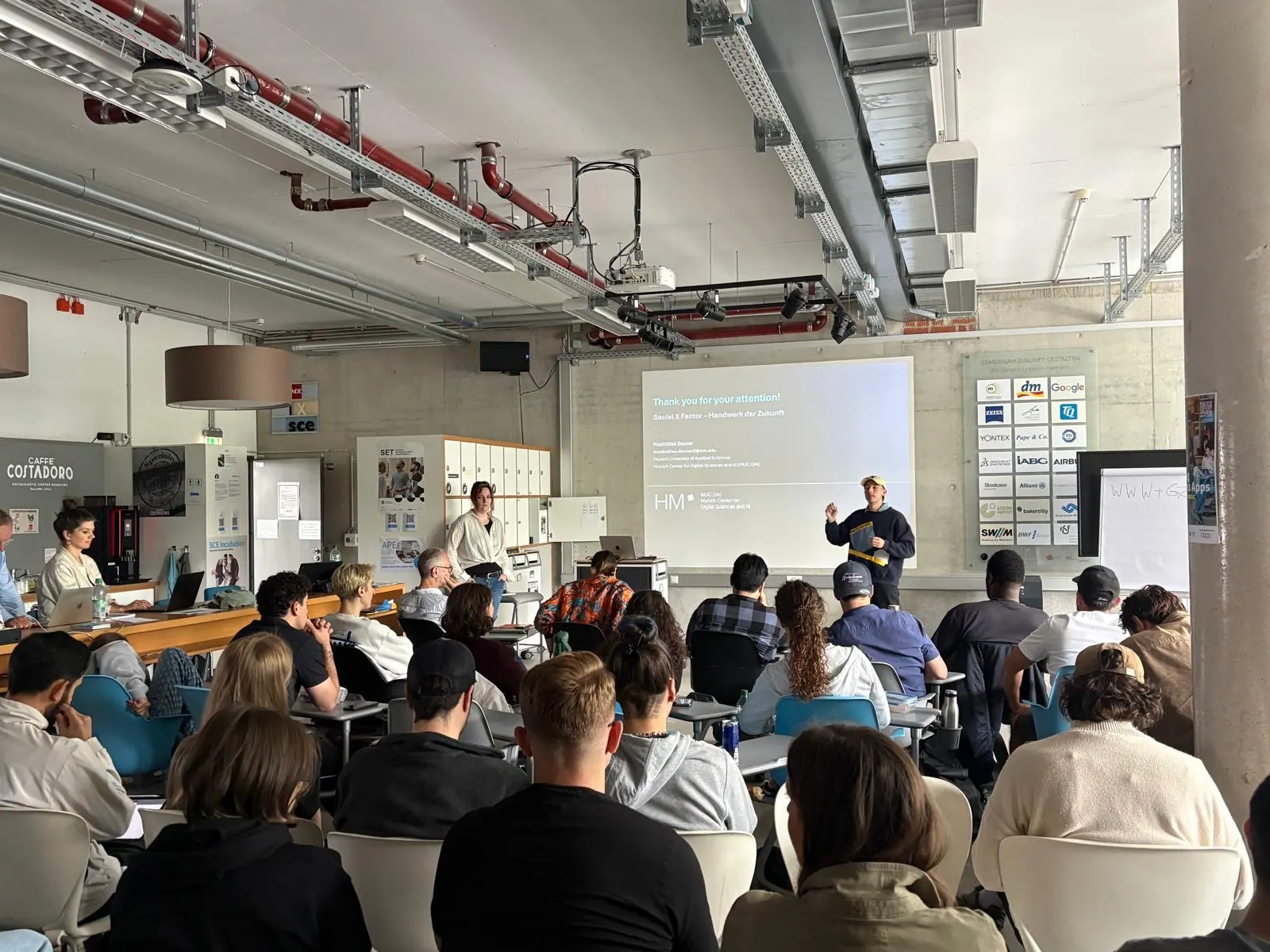
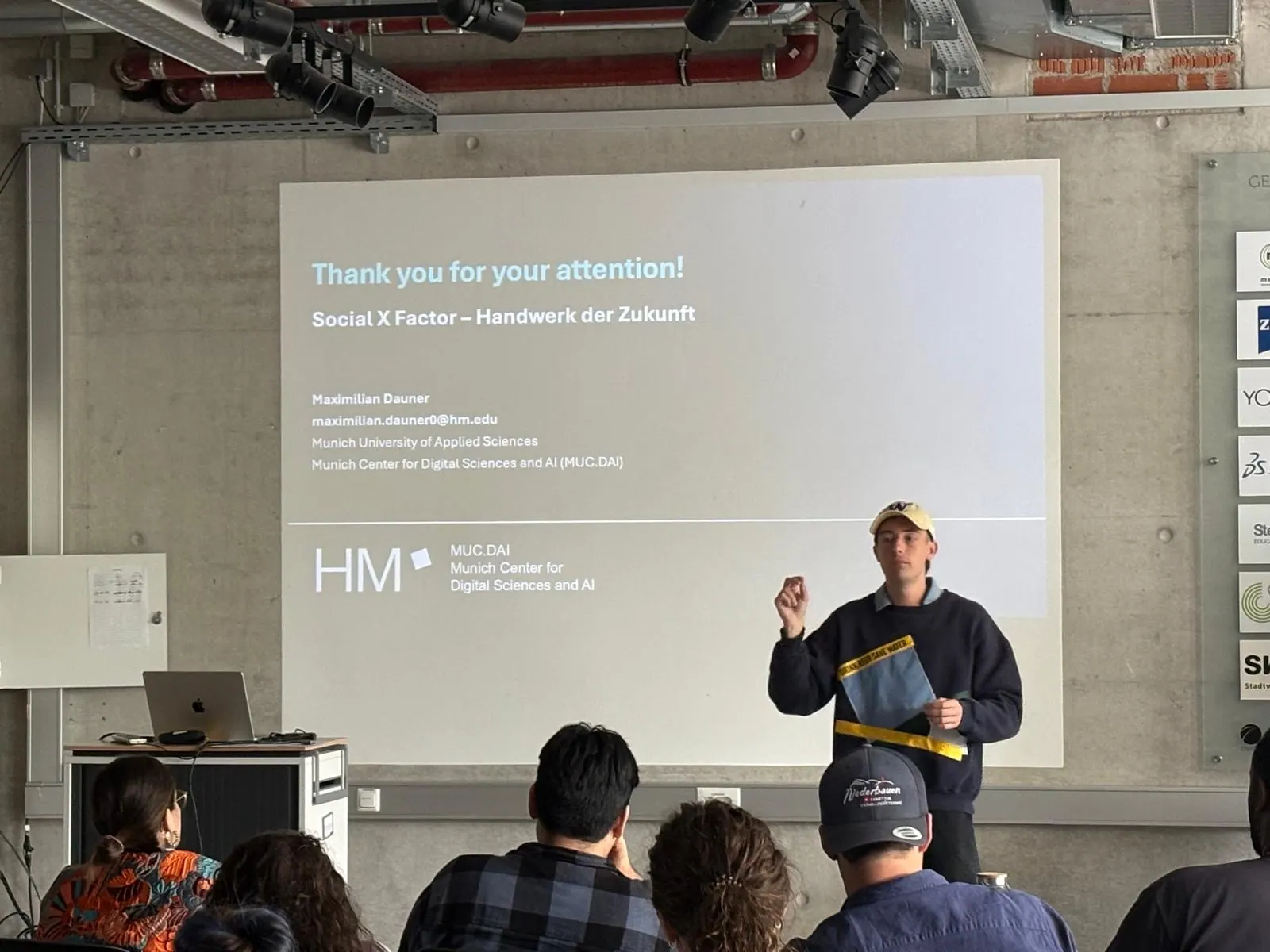
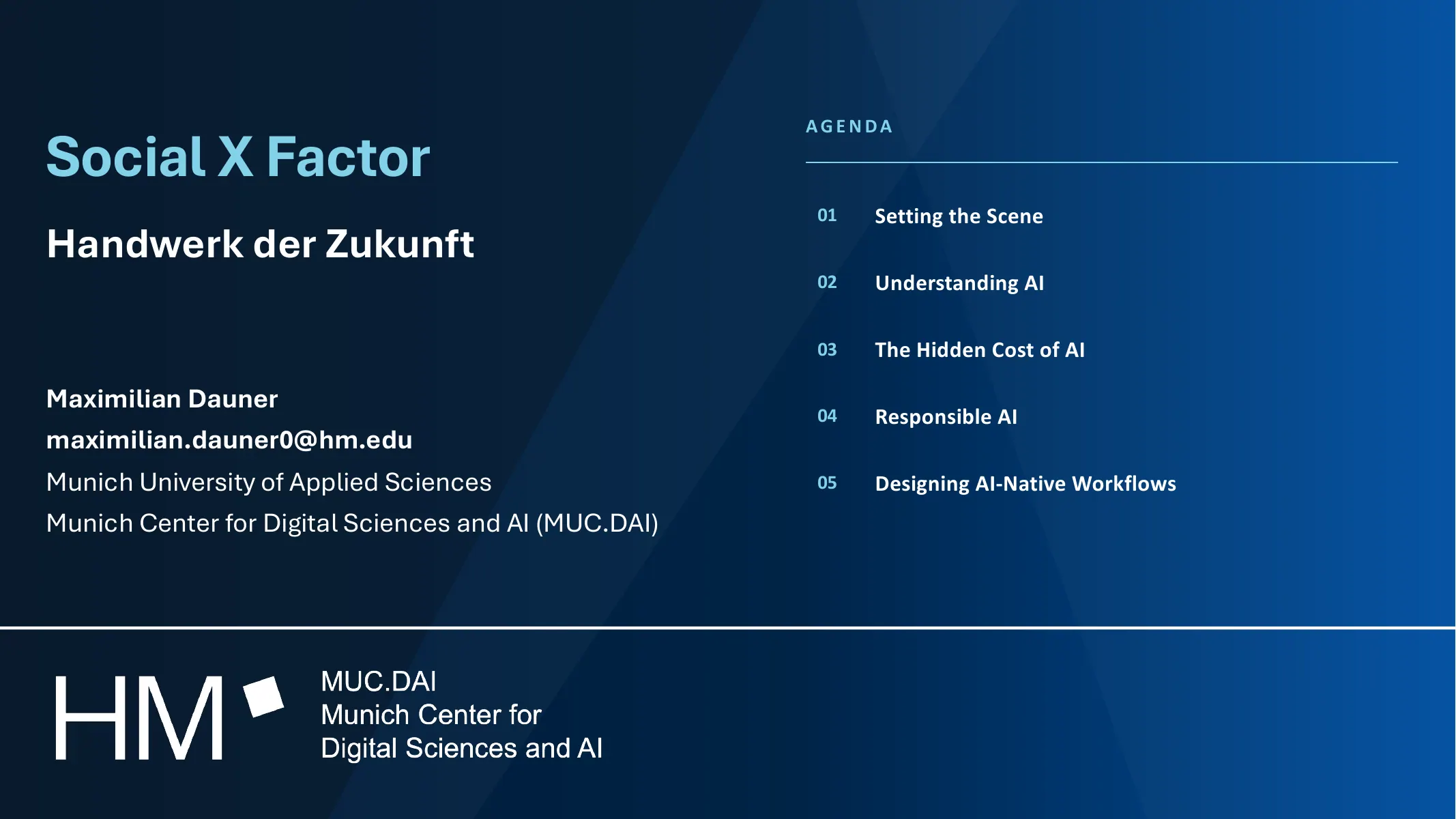
- Developed for Social X Factor at Munich University of Applied Sciences and delivered by Maximilian Dauner through MUC.DAI.


- 01
Context
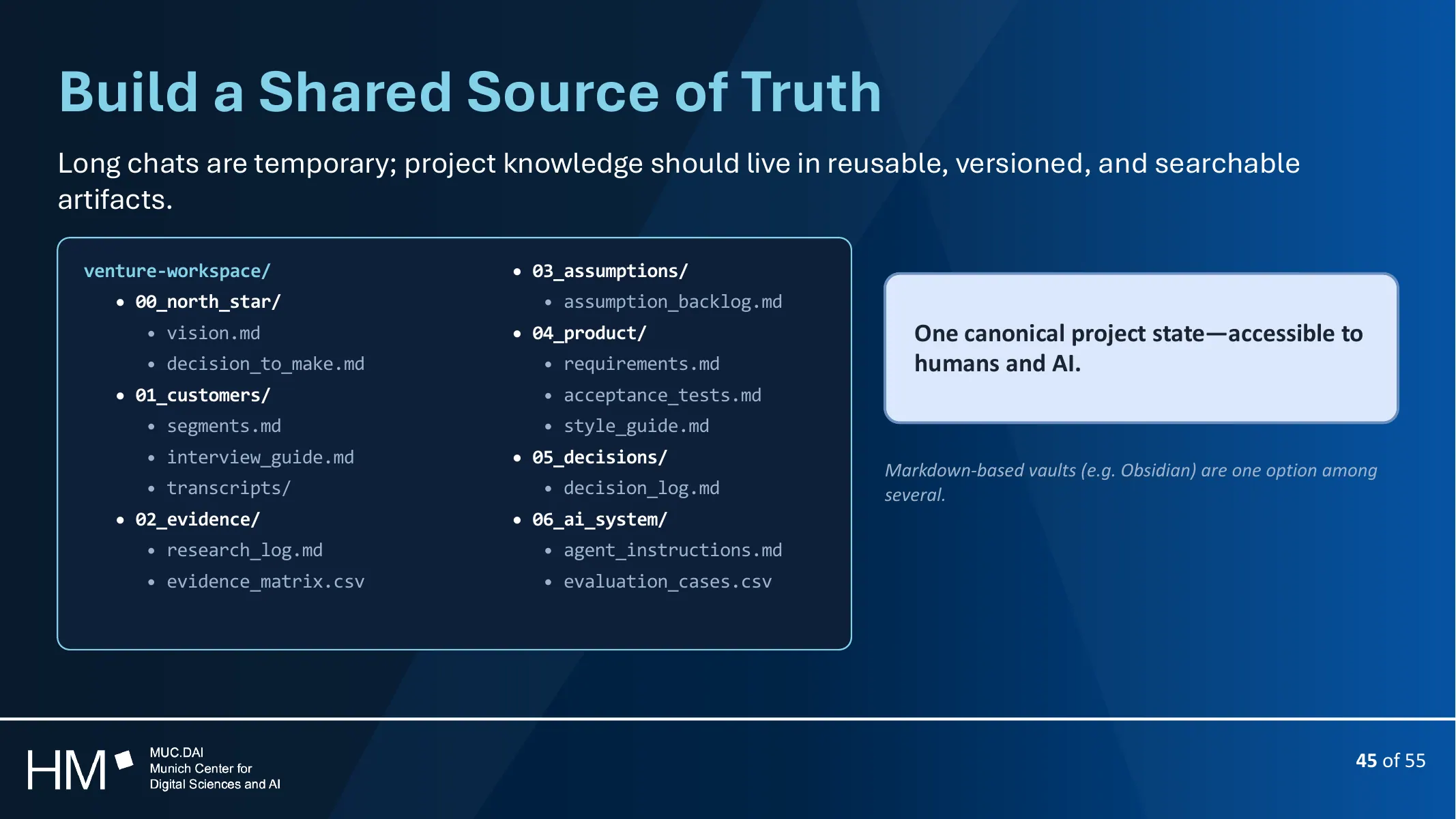
The workshop moved from model foundations and bias to shared context, traceable evidence, agentic workflows and human approval.
- 02
Creative vision
Make AI-native work observable: context, evidence, tools, memory, evaluation and review form an intentional system.
- 03
Challenge & constraints
Technical ambition had to remain subordinate to real decisions, inspectable evidence and responsible use.
- 04
What was made
An interactive learning journey culminating in redesigned entrepreneurial workflows around real problems.
- 05
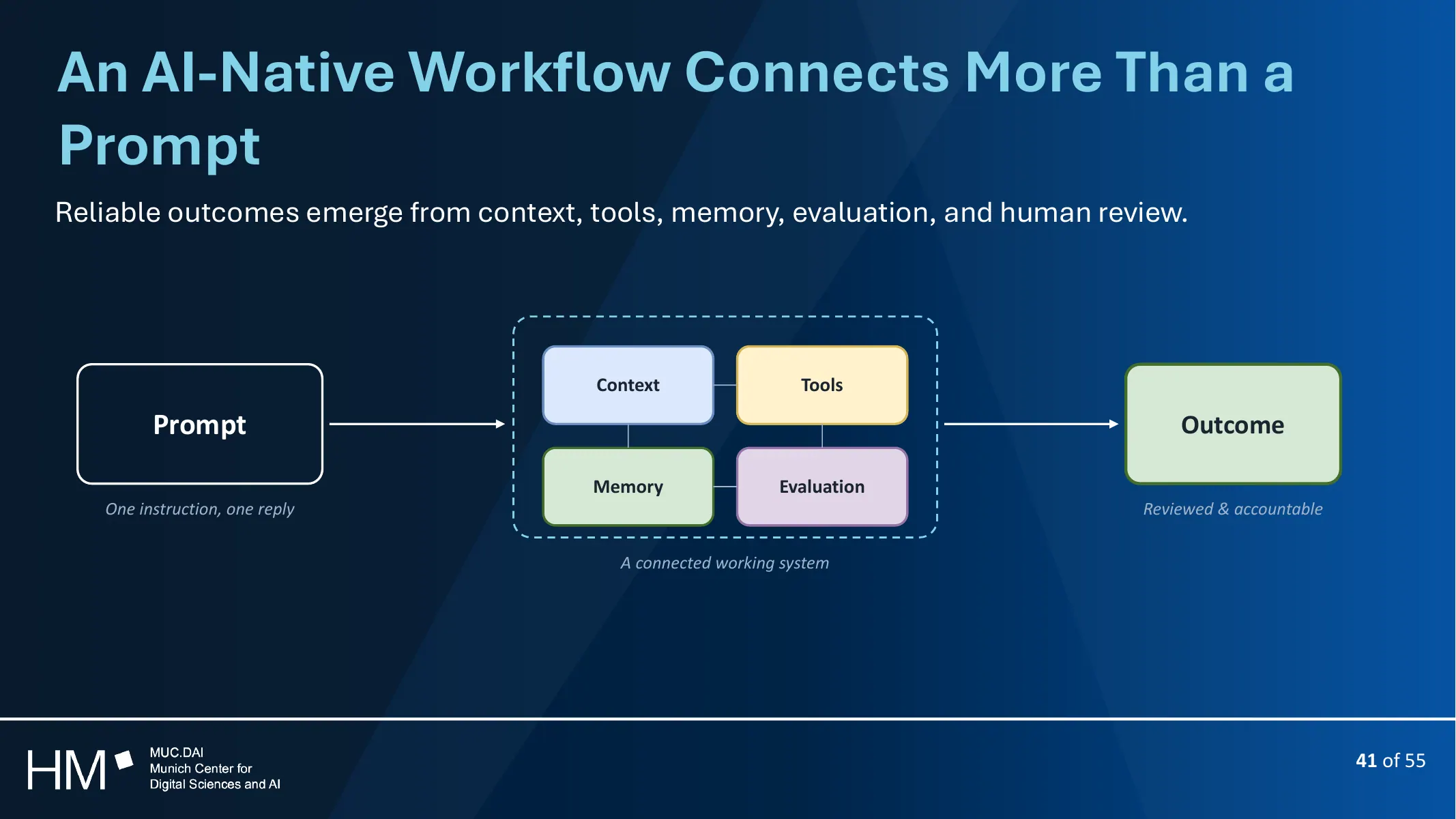
What was built
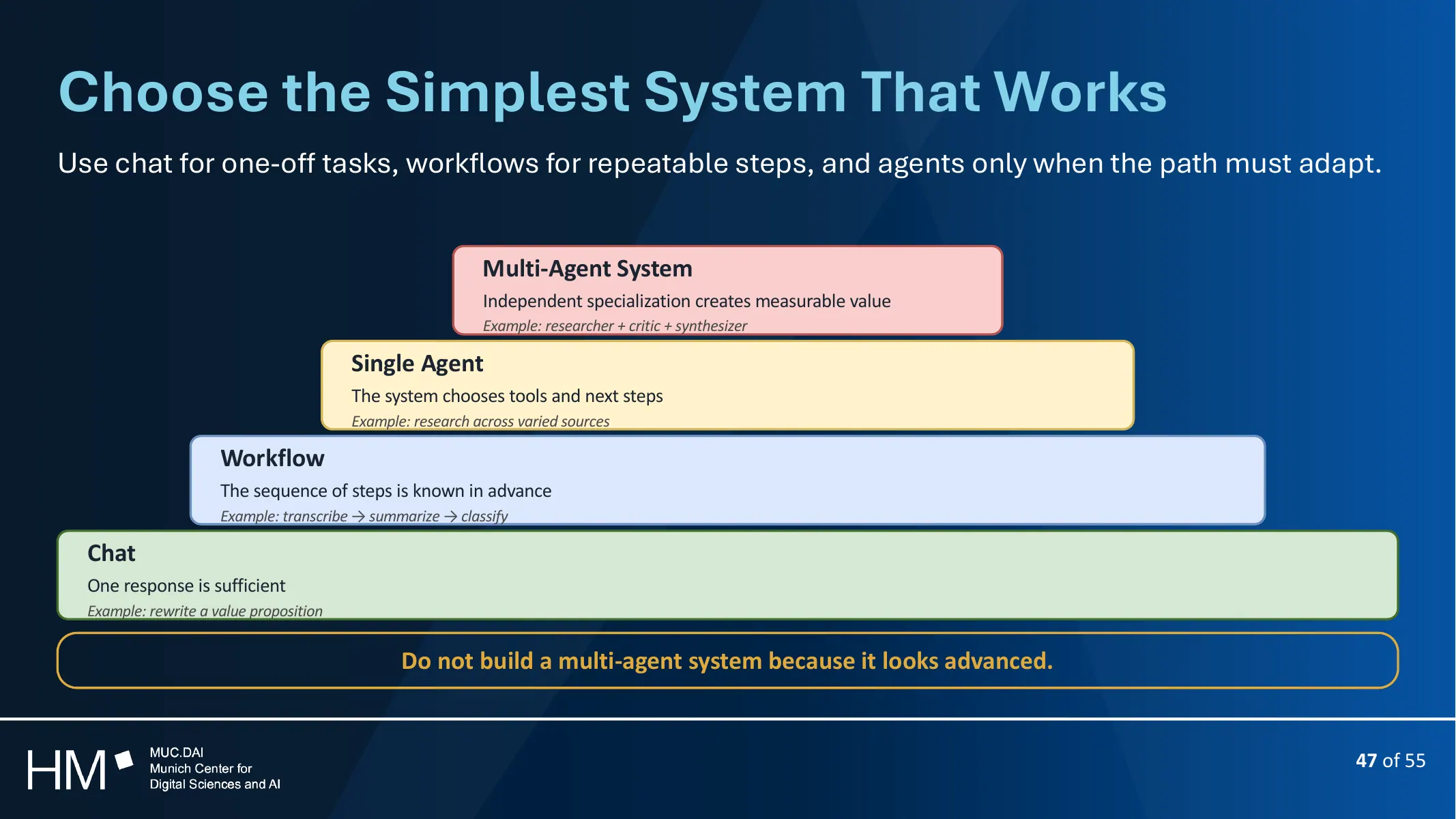
A practical framework distinguishing chat, fixed workflows, single agents and multi-agent systems, with clear decision gates.
Experience / System
The outcome and the infrastructure remain part of the same project truth.

What people see and feel
Work on a real decision
Participants identify what to capture, delegate, verify and retain as a human responsibility.
Direction remains visible at every stage.
Human responsibility
- Choose the real problem
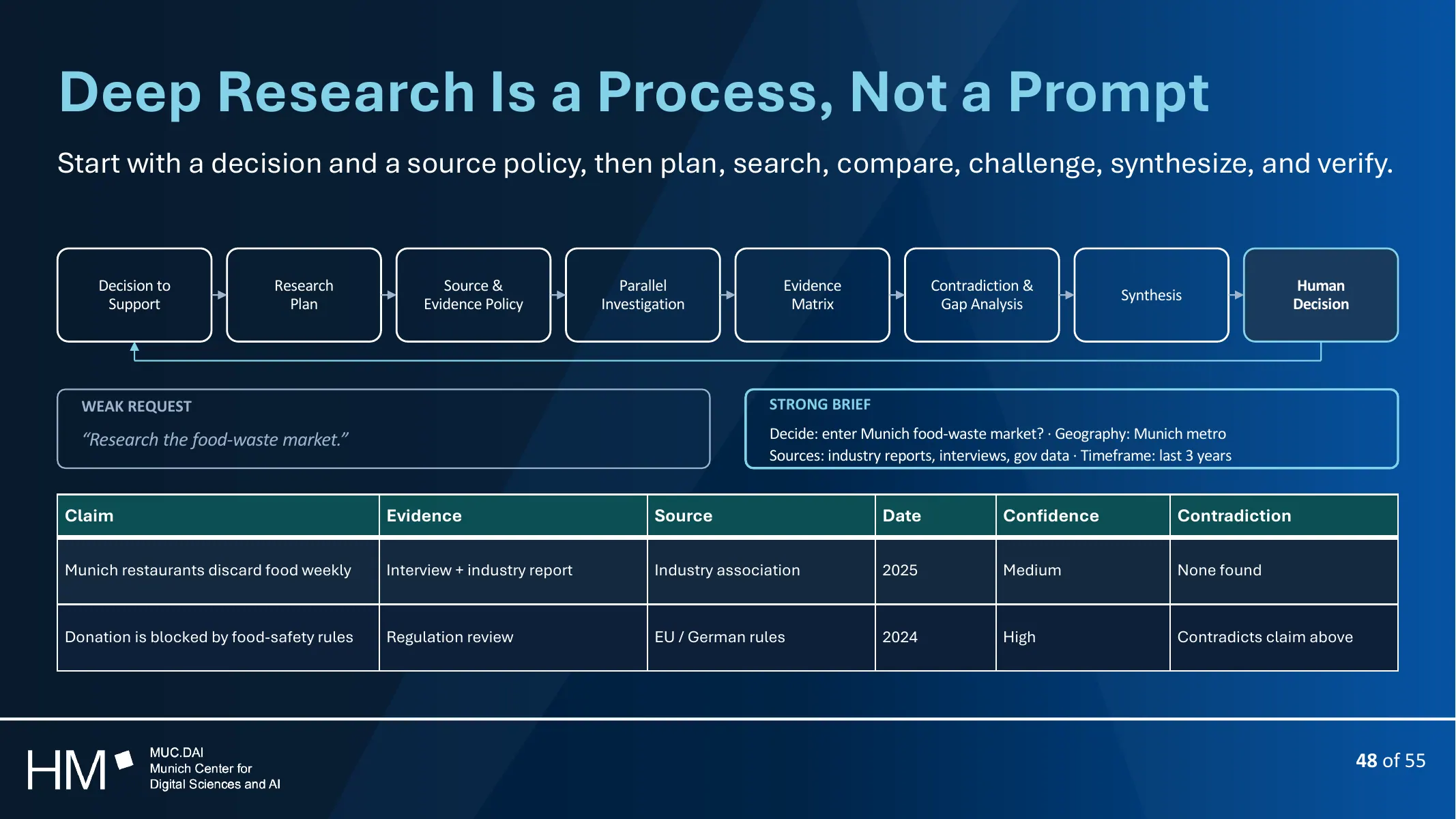
- Test assumptions with real evidence
- Define approval gates
- Retain accountability
Technical responsibility
- Capture structured context
- Coordinate bounded tasks
- Preserve traceability
- Support prototyping
Synthetic analysis is explicitly separated from customer evidence; autonomy is bounded by access, observation and approval.
Delivered as a live entrepreneurship workshop.
A workshop and method organizations can use to select and govern the right level of AI workflow complexity.
Complexity should be introduced only where it creates inspectable value and preserves human control.
The Craft of the Future presentation
Slide 1 of 10


- Slide 1 of 10
- Slide 2 of 10
- Slide 3 of 10
- Slide 4 of 10
- Slide 5 of 10
- Slide 6 of 10
- Slide 7 of 10
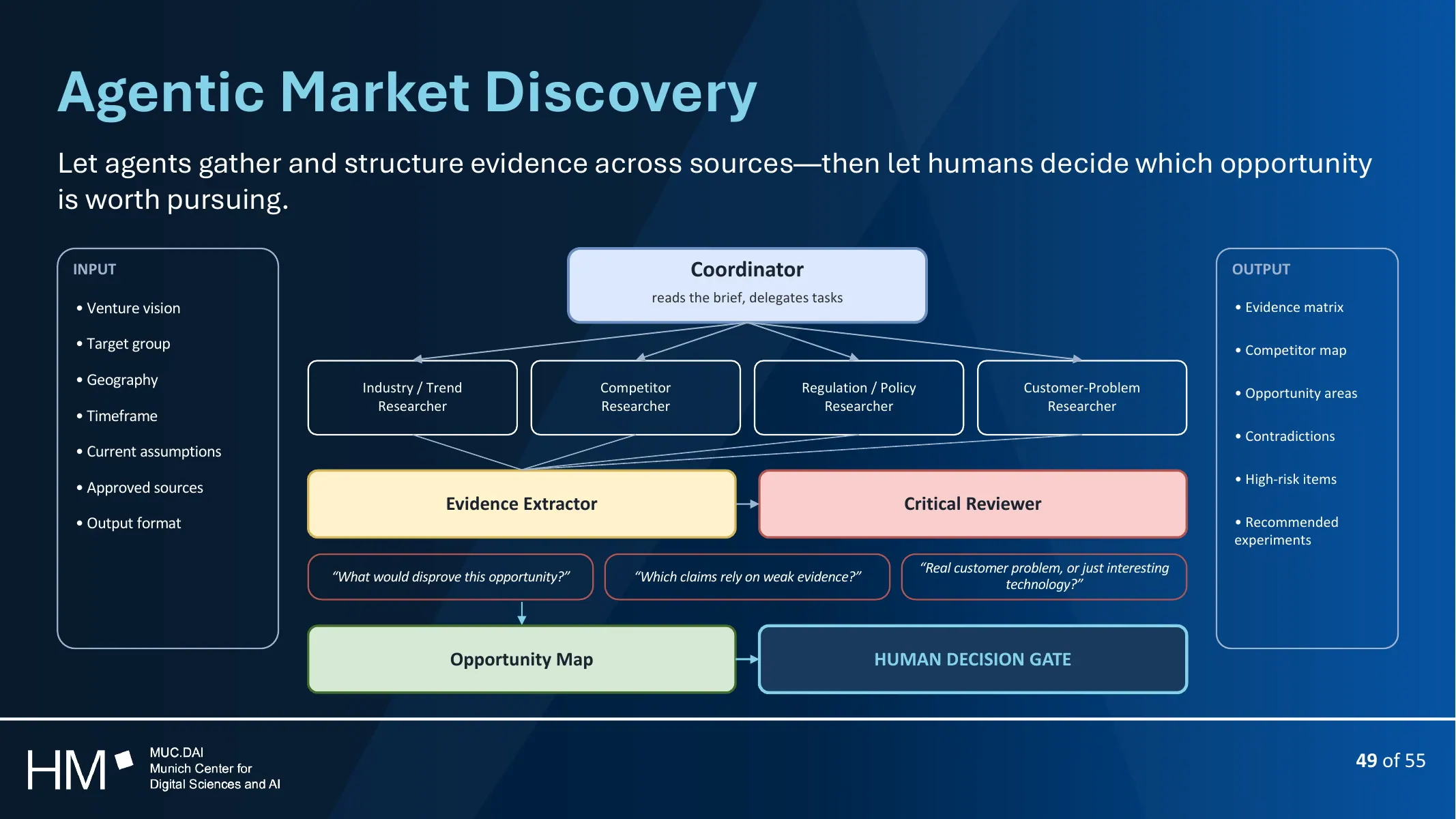
- Slide 8 of 10
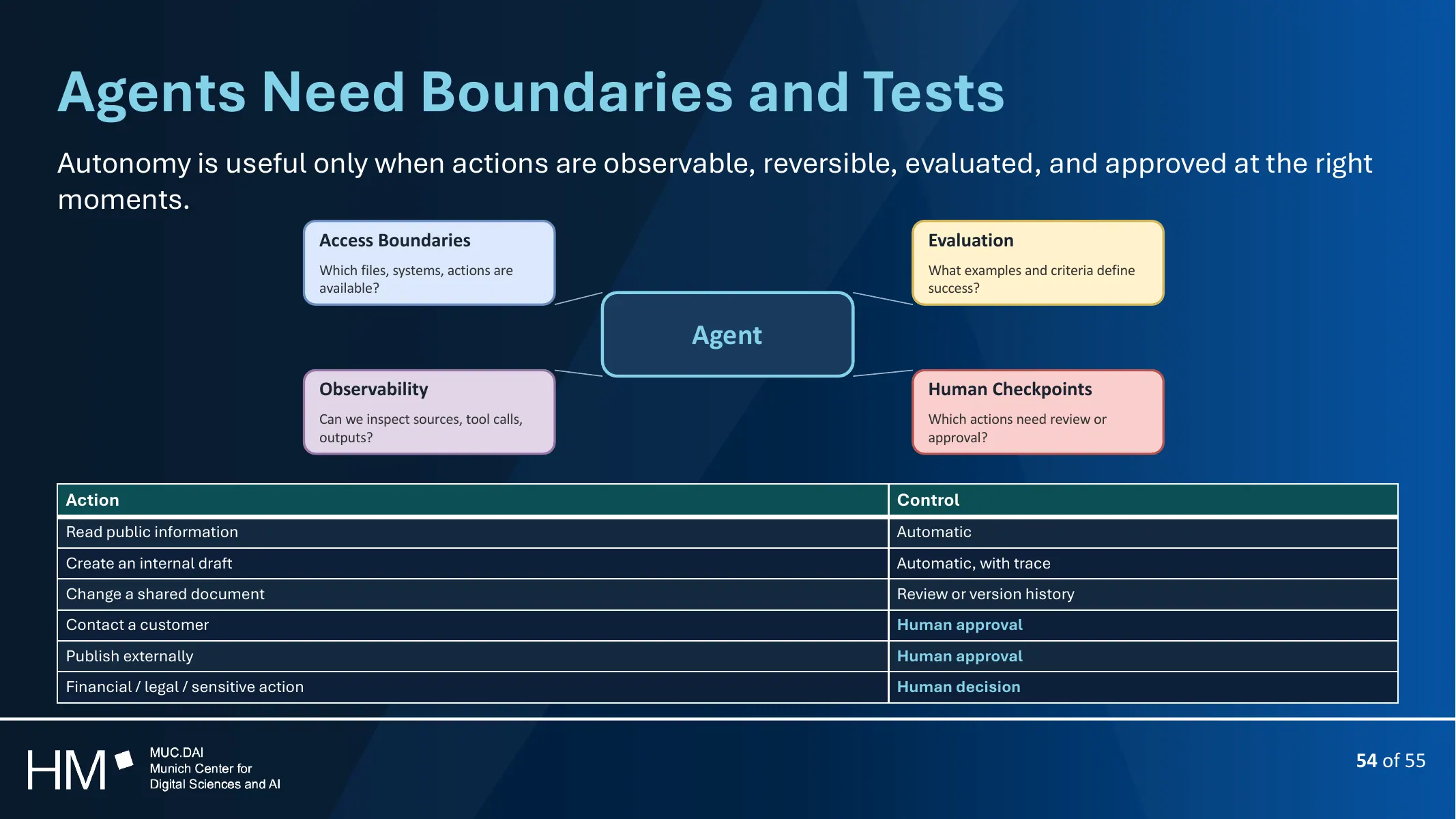
- Slide 9 of 10
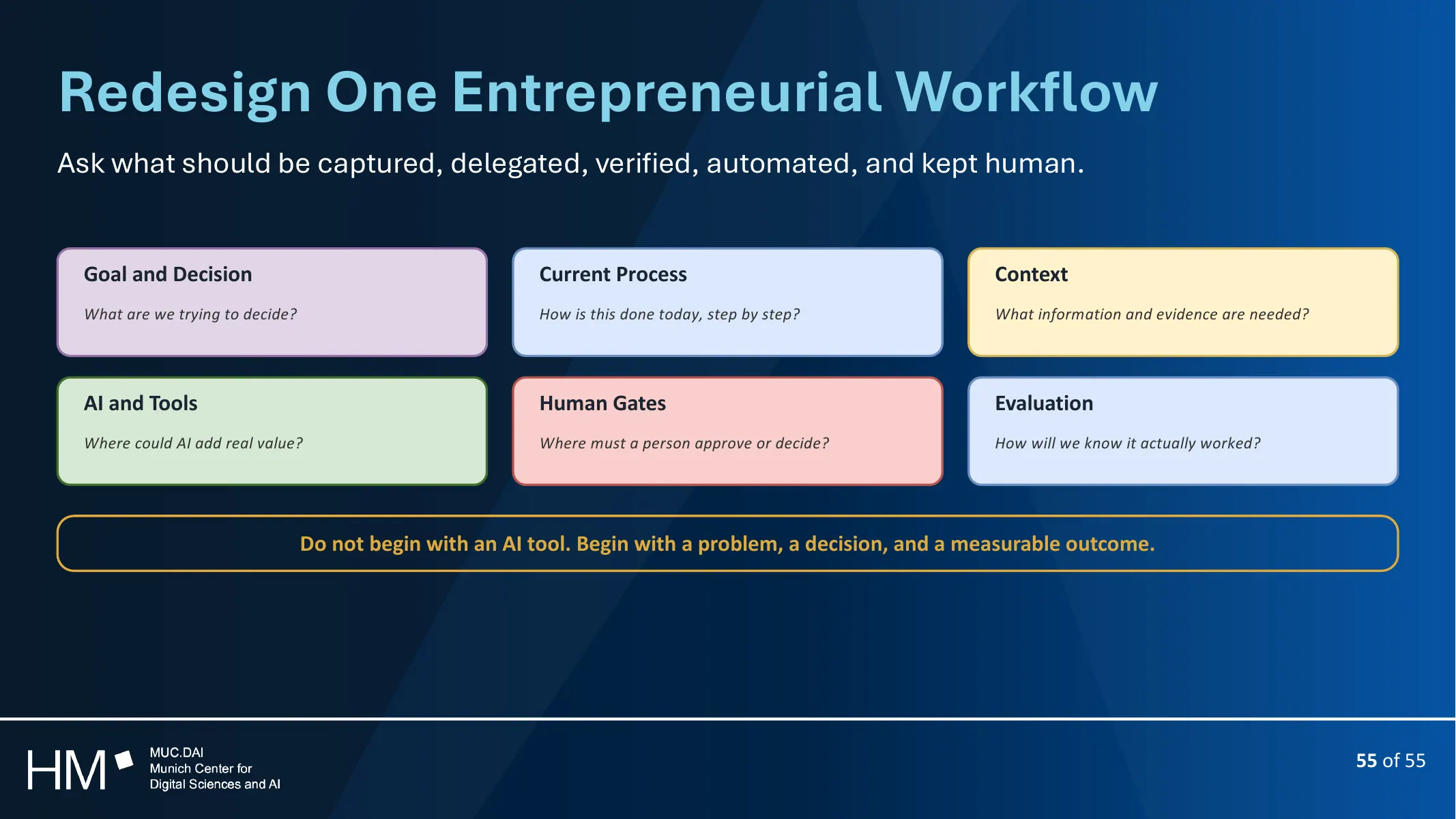
- Slide 10 of 10
The Craft of the Future
Claims carry their context.
Participants completed a practical redesign of an entrepreneurial workflow around a real problem and decision.
Adapt the method for innovation teams establishing reusable internal AI practices.
Continue through the system.

KI-Werkstatt
Knowledge Becomes an Experience.
Experience
Beyond Note-Taking
Spoken Knowledge, Made Visible.
Experience
Learning the Invisible
Where Mathematics Becomes Motion.
Experience